I'd Rather Be Welding Embroidery Review
When you spend as much time in the embroidery studio as I do, you develop a sixth sense for what will actually work on the hoop versus what just looks good on a screen. I d Rather Be Welding Funny Welding is one of those designs that seems simple at first glance but carries a lot of weight when it comes to execution and market appeal. As a designer who frequently prepares files for client projects, small business merchandise, and personalized gifts, I look beyond the novelty factor. I need to know if the design holds up under tension, how the thread colors interact with different fabric textures, and whether it translates well into a finished product that customers are proud to wear or display.
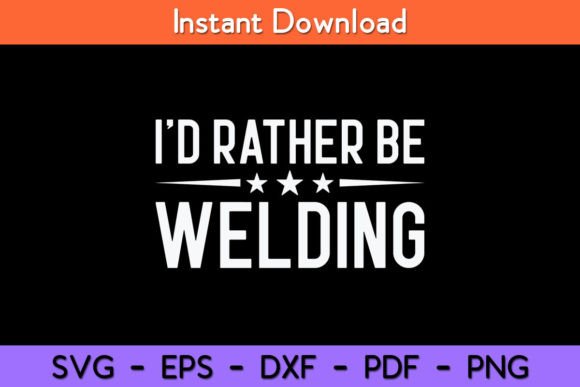
This SVG design falls squarely into the Crafts and Graphics categories, marketed as an instant download for cutting machines like Cricut and Silhouette. However, its visual language speaks directly to the machine embroidery community. The phrase "I'd Rather Be Welding" taps into a specific subculture—one that values ruggedness, humor, and practicality. My goal here is to evaluate this design not just as a digital asset, but as a viable component for real-world embroidery projects, from custom apparel to boutique branding.
First Impressions and Visual Personality
The immediate mood of I d Rather Be Welding Funny Welding is confident and slightly rebellious. It doesn’t try to be delicate or overly ornate; instead, it leans into a bold, straightforward aesthetic that mirrors the welding trade itself. For an embroidery designer, this clarity is a huge advantage. Designs that rely on complex, fine-line details often suffer during digitizing, leading to messy stitches or lost definition. This design, by contrast, appears to have a strong structural integrity.
The layout suggests a balanced composition where the text likely serves as the primary focal point, possibly accented by welding-related iconography such as sparks, masks, or tools. This kind of thematic integration is crucial for handmade products because it tells a story instantly. When a customer sees this on a sweatshirt or a tote bag, they don’t need to read every letter to understand the vibe. It communicates identity. For Etsy sellers and craft fair vendors, this recognition factor is invaluable. It reduces the cognitive load for the buyer, making the item feel more like a statement piece than just another generic novelty gift.
Real-World Application: Where Does It Shine?
In my experience, certain themes lend themselves better to specific mediums. While this is sold as an SVG for cutting, its robust graphic nature makes it an excellent candidate for applique design or heavy fill stitch applications in machine embroidery. Let’s look at how it performs in actual use cases.
- Custom Apparel and Sweatshirts: This is perhaps the most natural home for this design. Heavy cotton blends or fleece materials provide the stability needed for dense stitching. The humor resonates strongly on workwear-style garments, making it a top choice for holiday gifts or birthday presents for welders, mechanics, and industrial workers.
- Tote Bag Design: Canvas totes are a staple for craft business items. Using I d Rather Be Welding Funny Welding on a sturdy canvas bag creates a durable, reusable product that aligns with the "maker" ethos. The design’s bold lines ensure legibility even after years of washing and carrying.
- Embroidered Patches: For cap embroidery or jacket accents, this design works exceptionally well as a patch. The clear boundaries make it easy to apply satin stitch borders, giving it a professional, badge-like finish that elevates the perceived value of the finished product.
- Kitchen and Home Decor: Don’t overlook tea towels or aprons. A welding-themed design on a kitchen towel adds a touch of personality to a workspace. It bridges the gap between functional utility and personal expression, which is key for printable mockups and digital product previews in online shops.
Technical Considerations and Stitch Density
As a reviewer, I must address the technical realities of bringing this design to life. Even the best graphic fails if the digitizing ignores fabric physics. When preparing I d Rather Be Welding Funny Welding for production, several factors come into play.
Stitch Density and Hoop Size: You need to verify the stitch density before committing to large runs. If the fill areas are too dense, the fabric may pucker, especially on lighter materials. Conversely, if the design relies on thin running stitch for intricate details, those elements might get lost in the weave of textured fabrics. Always check the recommended hoop size to ensure the entire design fits comfortably without excessive trimming or re-hooping, which can misalign the artwork.
Fabric Texture and Stabilizer: The choice of stabilizer is non-negotiable. For stretchy fabrics like jersey knits used in t-shirts or baby clothes, a cut-away stabilizer is essential to prevent distortion. On woven fabrics like denim or canvas, a tear-away might suffice, but testing on scrap fabric is always the first step. I also recommend inspecting the thread colors carefully. High contrast between the thread and the fabric background ensures that the text remains readable. On dark fabrics, light threads pop, but on light fabrics, you might need darker threads or a contrasting applique base to maintain visibility.
Where to Use Caution
While versatile, this design isn’t suitable for every scenario. Avoid using it on extremely small hoop sizes where tiny lettering or detailed corners might become indistinguishable. Textured fabrics like bouclé or heavy chenille can obscure the clean lines of the design, leading to a muddy appearance. Additionally, be wary of applying this to curved surfaces like fitted caps if the design lacks proper curve adjustment in the file. Frequent washing is another consideration; ensure that the stitch types used (such as satin stitch vs. fill stitch) are durable enough to withstand commercial laundering without fraying or losing shape.
Impact on Brand Consistency and Customer Trust
For small shop owners and creative entrepreneurs, consistency builds trust. A well-executed embroidery project signals professionalism. When I d Rather Be Welding Funny Welding is stitched cleanly, with tight backing and appropriate thread tension, it reflects positively on your brand. It shows that you care about the details, even in humorous or niche designs.
This attention to detail enhances the giftability of the item. Personalized gifts are often emotional purchases. Buyers want to feel that the recipient will appreciate both the sentiment and the quality. A sloppy stitch job can undermine the thoughtfulness of the gift, whereas a crisp, clear design reinforces the value. In the context of Etsy listings or boutique branding, high-quality photos of the finished product—showcasing the texture of the stitches and the vibrancy of the thread colors—are critical for driving engagement and sales.
Practical Designer Notes for Implementation
Before adding this to your library of design assets, I recommend the following workflow:
- Test on Scrap Fabric: Never run a new design directly onto your final product. Test it on the exact fabric type you plan to use to assess puckering and thread pull.
- Black and White Mockups: View the design in grayscale to check for contrast balance. If the design looks flat in black and white, it may lack visual depth in color.
- Licensing Check: Since this is a digital embroidery file, confirm the license terms. Ensure you have the right to sell finished products made from this design, especially if you are operating a commercial embroidery business.
- Thread Color Comparison: Experiment with different thread colors to see how they interact with various fabric backgrounds. Sometimes a standard black thread looks harsher than a charcoal or navy option.
In conclusion, I d Rather Be Welding Funny Welding is a strong contender for anyone looking to add humor and personality to their embroidery projects. Its bold theme and likely clean structure make it suitable for a wide range of applications, from custom apparel to handmade products. By paying close attention to technical details like stitch density, stabilizer choice, and fabric compatibility, you can transform this digital file into a high-quality finished product that resonates with customers and stands out in a crowded marketplace.